Do you have an emergency or need to schedule an appointment? We’re here to help. 📞 Call Now:(386) 465-3786
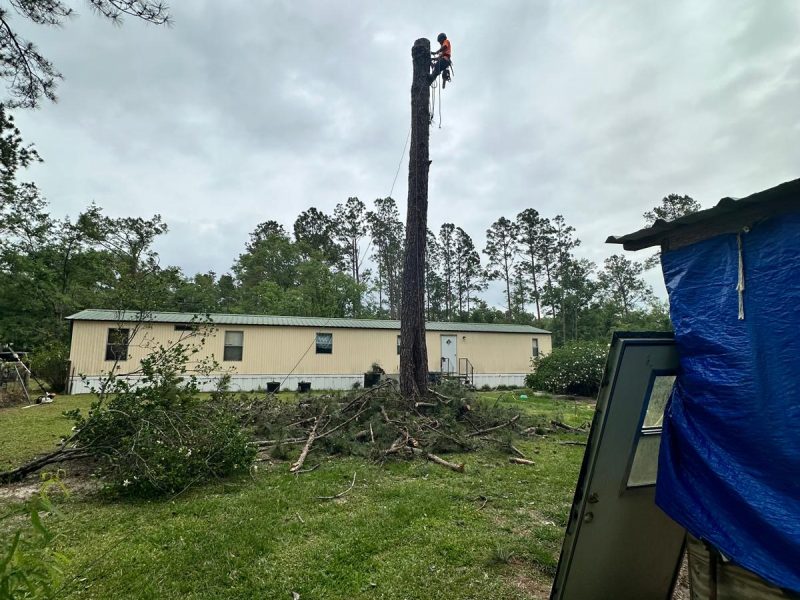
Standing at the base of a tall tree that needs to come down — especially one growing close to your home — makes the challenge immediately clear. The tree is heavy, it’s high, and there’s very little room for error when a structure is just feet away from the drop zone.
Professional tree removal crews approach this challenge in one of two ways: by climbing the tree directly using specialized gear, or by using heavy equipment such as bucket trucks or cranes to access and control the removal from the outside. Both methods are effective, and choosing between them depends on a combination of factors specific to each job.
At Javier Cazarez Tree Services LLC, our team is trained and equipped for both approaches. Here’s what each method involves, when each one is used, and why the right choice matters for the safety of your property and everyone on it.
The Climbing Method: Precision from the Inside
Tree climbing for removal purposes is a highly skilled technique that requires proper training, certified safety gear, and years of hands-on experience. When a climber scales a tree for removal, they work from a harness system anchored to the trunk and upper branches, moving through the tree methodically as sections are cut and lowered to the ground.
During a climb removal, the process typically looks like this:
- The climber ascends using ropes, spurs, and a saddle harness, securing themselves at multiple points as they move upward
- Starting from the top of the tree, branches and upper sections are cut and either dropped in a controlled fall zone or lowered using rigging ropes attached to the ground crew below
- The climber works their way down the trunk in sections, making precise cuts and coordinating with the ground crew at every stage
- Each section is guided to the ground in a controlled manner, preventing uncontrolled drops that could damage the property below
Climbing is typically the preferred method when:
- Access to the tree is limited and heavy equipment cannot reach the site
- The tree is growing in a tight space between structures, fences, or other trees
- The property cannot support the weight or footprint of a crane or bucket truck
- The terrain is uneven, sloped, or otherwise difficult for equipment to navigate safely
- A precise, controlled removal with minimal ground disturbance is the priority
The Equipment Method: Control from the Outside
When site conditions allow, heavy equipment offers a different set of advantages. A bucket truck lifts crew members to working height without requiring a full climb, while a crane can be used to lift and remove entire trunk sections in a single controlled operation — which is particularly useful for very large or heavily compromised trees.
Equipment-based removal is typically preferred when:
- The tree is extremely large and the volume of wood makes a full climb removal impractical
- The tree is dead, hollow, or structurally compromised in a way that makes climbing unsafe
- Speed is a factor, such as in an emergency removal situation
- The crane or bucket truck can be positioned with a clear path to the tree
- Removing the tree in large sections rather than small cuts is the safest approach for the specific situation
The key limitation of equipment-based removal is access. Not every property has the clearance, ground conditions, or entry points needed to position a crane or bucket truck effectively. In those cases, climbing becomes not just the preferred method but the only viable one.
When Both Methods Work Together
In practice, many large tree removals near residential structures use a combination of both approaches. A climber may handle the upper canopy and smaller branches while equipment manages the heavier trunk sections. The ground crew plays a critical role in both scenarios — managing ropes, clearing debris, and maintaining the safety of the work zone throughout the job.
This coordinated approach is exactly what allows a trained professional crew to remove a tall tree just feet from a roofline without causing damage to the structure below. It is also what makes this type of work genuinely dangerous for anyone attempting it without proper training and equipment.
Why Tall Tree Removal Near Structures Demands Professional Experience
The closer a tree is to your home, the less margin there is for error. A miscalculated cut, an unexpected shift in weight, or a section that falls wide of its intended zone can result in serious damage to the structure — or injury to anyone nearby.
Professional crews bring:
- Trained climbers with hands-on experience in aerial removal techniques
- Rigging systems that control exactly where each section lands
- Ground crew coordination that keeps the entire operation moving safely
- Site-specific planning before the first cut is ever made
- Liability insurance that protects the homeowner if anything unexpected occurs
Attempting to remove a tall tree near a structure without this level of preparation is one of the most common causes of preventable property damage in residential tree care.
Tall Tree Removal Services in Jennings, FL
Javier Cazarez Tree Services LLC handles tall tree removals of all complexity levels throughout Jennings, FL and within 100 miles of the surrounding area. Whether the job calls for a skilled climber, heavy equipment, or a combination of both, our crew arrives prepared with the right plan for your specific property.
Our full range of services includes:
- Tree Removal
- Tree Services
- Tree Trimming
- Tree Pruning
- Stump Grinding
We are licensed, insured, bilingual, and available 24/7 for emergency situations.
Schedule Your Tree Removal Consultation in Jennings, FL
Have a tall tree growing too close to your home or structure? Don’t wait for the next storm to make the decision for you. Contact Javier Cazarez Tree Services LLC today for a professional evaluation and a safe removal plan built around your property.
📞 (386) 855-5544 📞 (386) 205-5560 (English) ✉️ info@jcazareztreeservices.com
Call us today to schedule your free consultation.
Post Tags :
Share :
Our Services
Information
- 100 Miles around Jennings, Florida
- 24/7 Availability for emergencies
- Residential and Commercial
- Licensed & Insured
- Payment: Cash, Check, Zelle
Do you have an emergency or need to schedule an appointment? We’re here to help. 📞 Call Now:(386) 465-3786