Do you have an emergency or need to schedule an appointment? We’re here to help. 📞 Call Now:(386) 465-3786
Overhanging Trees and Homeowner Insurance in Florida: What You Should Know
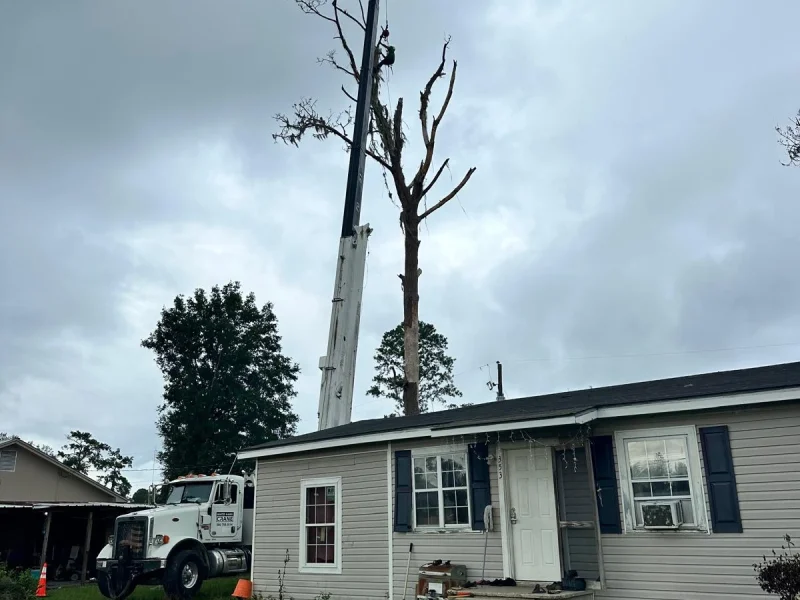
A tree growing over your roof is more than a maintenance concern — it can directly affect your homeowner’s insurance coverage, your premiums, and your ability to file a successful claim if something goes wrong. In Florida, where storms are frequent and trees grow fast, this is a conversation more homeowners need to have before a problem develops, not after.
At Javier Cazarez Tree Services LLC, we work with homeowners throughout Jennings, FL and within 100 miles of the surrounding area who are dealing with trees that have grown too close to — or directly over — their homes. Here’s what the insurance side of that situation actually looks like.
How Insurance Companies View Overhanging Trees
From an insurance perspective, a tree overhanging your home is a known risk. Most homeowner’s insurance policies in Florida will cover sudden, accidental damage caused by a tree falling on your home — but the key word is “sudden.” If an insurance adjuster determines that the damage was the result of a tree that had been visibly dead, diseased, or neglected for an extended period, the claim can be denied on the basis of negligence.
In other words: if you knew the tree was a problem and didn’t address it, your insurer may argue that you had reasonable opportunity to prevent the damage. That argument gets harder to counter when the tree was dead, visibly leaning, or had been dropping large limbs before the final failure.
The Negligence Question
Florida homeowners are generally responsible for maintaining trees on their property in a condition that doesn’t pose an unreasonable hazard to their own structures or to neighboring properties. When a tree failure causes damage — to your home, your neighbor’s fence, or a vehicle parked in the driveway — the question of whether the property owner knew or should have known about the risk becomes central to how liability and coverage are determined.
Signs that an insurer or a court might consider evidence of known risk include:
- Visible deadwood throughout the canopy or trunk
- Fungal growth at the base or on the bark
- Previous limb failures from the same tree
- A documented lean toward the structure that had been developing over time
- Complaints or notices from neighbors or local authorities
If any of these conditions existed before a tree caused damage, the “sudden and accidental” standard that most policies require for a covered loss becomes much harder to meet.
When a Neighbor’s Tree Causes the Damage
A common question Florida homeowners ask is what happens when a neighbor’s tree falls onto their property. The general rule is that each homeowner’s insurance covers damage to their own structure, regardless of where the tree originated — but liability may follow if the tree’s owner was notified of a hazard and failed to act.
If you’ve noticed a tree on a neighboring property that appears dead, diseased, or dangerously positioned over your home, documenting that concern in writing — a letter to the neighbor, a complaint to the municipality if applicable — creates a record that the risk was known and communicated. That documentation can matter significantly if the tree eventually causes damage.
What Insurers May Ask For
Some insurance carriers in Florida have begun requiring documentation of tree maintenance as part of policy renewals, particularly for properties with large trees near structures. Others include inspection clauses that allow them to photograph or assess a property before issuing or renewing coverage.
If your insurer has flagged a tree on your property, or if you’re in the process of shopping for coverage and have a large tree near your home, having documentation that the tree has been professionally assessed — and that any identified hazards have been addressed — can support your coverage position.
The Practical Step: Remove the Risk Before It Removes Your Coverage
The most effective way to manage the insurance dimension of an overhanging tree is to address the tree itself. A dead or structurally compromised tree growing over a roof is not a borderline case — it is an active liability that is getting worse, not better, with time.
Dead wood becomes more brittle as it dries. Root systems continue to decay. The structural integrity of the tree is diminishing with every week it remains in place. And the longer a visibly hazardous tree remains unaddressed, the harder it becomes to argue that the eventual failure was sudden and unforeseeable.
Professional removal eliminates the exposure entirely — both to the physical damage the tree could cause and to the insurance complications that come with a denial.
Tree Services in Jennings, FL
Javier Cazarez Tree Services LLC removes trees that have grown too close to or directly over residential and commercial structures throughout Jennings, FL and within 100 miles of the surrounding area. We work with the equipment and experience required for high-risk removals near structures, and we do it safely regardless of the tree’s size or condition.
Our full range of services includes:
- Tree Services
- Tree Removal
- Tree Trimming
- Tree Pruning
- Stump Grinding
We are licensed, insured, bilingual, and available 24/7 for emergency situations.
Don’t Wait for a Claim to Find Out Where You Stand
If you have a tree growing over your home and you’re not sure whether it’s a coverage issue, a removal issue, or both — contact us today for a professional evaluation. We’ll give you a clear picture of the tree’s condition so you can make an informed decision.
Post Tags :
Share :
Our Services
Information
- 100 Miles around Jennings, Florida
- 24/7 Availability for emergencies
- Residential and Commercial
- Licensed & Insured
- Payment: Cash, Check, Zelle
Do you have an emergency or need to schedule an appointment? We’re here to help. 📞 Call Now:(386) 465-3786