Do you have an emergency or need to schedule an appointment? We’re here to help. 📞 Call Now:(386) 465-3786
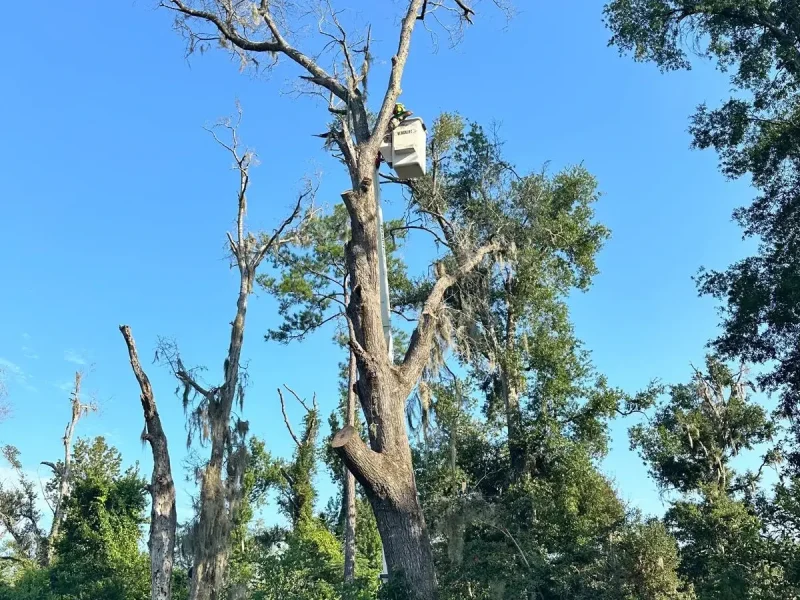
Oak trees are one of the most iconic and beloved trees throughout Florida. They grow large, live long, and provide shade, character, and habitat that few other trees can match. But they can also be confusing — especially when a large oak starts dropping its leaves or looks bare for weeks at a time, and you’re not sure whether you’re looking at a tree in decline or simply a tree doing what oaks in Florida naturally do.
At Javier Cazarez Tree Services LLC, we get this question from homeowners throughout Jennings, FL regularly. The difference between a dormant oak and a dead one matters enormously — both for your peace of mind and for your property’s safety. Here’s how to read the signs correctly and know when it’s time to call a professional.
Understanding Oak Behavior in Florida
Florida is home to several oak species, including the Live Oak, Laurel Oak, Water Oak, and Sand Live Oak. Each behaves slightly differently throughout the year, and understanding those differences is the first step toward reading your tree accurately.
- Live Oaks are technically evergreen but go through a brief leaf exchange period in late winter to early spring — typically February through April — where they drop their old leaves and replace them with new growth almost simultaneously. During this window, a Live Oak can look nearly bare for a short period and still be completely healthy.
- Laurel Oaks and Water Oaks are semi-deciduous and more likely to drop significant leaf coverage during cooler months or periods of drought stress. A Laurel Oak that looks thin or bare in winter is not necessarily in trouble — but the same tree looking thin in the height of summer is a different story.
Knowing which species you have is the starting point for any accurate assessment.
Signs Your Oak Tree Is Dormant or Stressed — Not Dead
Before assuming the worst, look for indicators that the tree is still alive and simply going through a natural or stress-related cycle:
- New bud or leaf growth, even if sparse — small green buds appearing on branch tips are one of the clearest signs of a living tree
- Green tissue under the bark — scratch a small section of bark on a branch with your fingernail or a pocket knife. If the layer beneath is green or white and moist, the branch is alive. This is one of the most reliable field tests available
- Flexible branches — living branches have some give and bend without snapping. Brittle branches that break cleanly and dryly are more likely dead
- Seasonal timing — if the tree lost leaves during late winter or during an unusually dry period, and the loss is uniform across the canopy, a natural cycle or temporary stress is the more likely explanation
Signs Your Oak Tree Is Dead or Dying
A tree that shows several of the following signs is likely dead or in serious decline and should be evaluated by a professional without delay:
- No leaf production across multiple growing seasons — an oak that produced no new leaves through an entire spring and summer is showing a serious sign of failure
- Brown, dry tissue under the bark — when the scratch test reveals brown, dry, or crumbly material instead of green or white tissue, that branch or section of trunk is dead
- Fungal growth on the trunk or base — mushrooms, conks, or shelf fungi growing on the trunk or at the root flare are a strong indicator of internal decay, often advanced by the time they become visible
- Bark falling away from the trunk in large sections without any new growth beneath
- Brittle, dry branches throughout the canopy that snap cleanly with no moisture
- Spanish moss taking over — while Spanish moss does not kill oak trees on its own, a sudden heavy accumulation on a tree that previously carried less can indicate that the canopy has thinned significantly and the tree is in decline
- Significant lean or root heaving that has developed without a clear storm cause
- Multiple large dead limbs scattered throughout the canopy rather than isolated to one area
The Risk of Leaving a Dead Oak in Place
Oak trees are large, heavy, and deeply rooted. A dead oak does not fall gently — when it fails, it fails suddenly and with significant force. The decay that kills an oak often works from the inside out, meaning the external appearance can remain relatively intact even as the structural integrity of the trunk and root system deteriorates to the point of failure.
Dead oaks are particularly hazardous because:
- The wood becomes brittle and unpredictable — unlike a living tree, which has flexibility and can shed wind load, a dead trunk becomes rigid and more prone to sudden, complete failure
- Root decay reduces anchoring — as the root system dies and decays, the tree’s ability to hold its position in the soil diminishes, increasing the risk of the entire tree uprooting
- Falling limbs become more frequent — dead branches lose their attachment strength over time and can fall without warning, even on calm days
If your assessment or a professional evaluation confirms the tree is dead, prompt removal is the safest course of action — particularly if the tree is near your home, vehicle, power lines, or areas where people spend time.
When to Call a Professional
If you’re unsure after your own assessment, a professional evaluation is always the right next step. There are also situations where calling a professional immediately is the correct move:
- The tree is large and located near a structure, power line, or high-traffic area
- You notice the tree leaning, root heaving, or significant bark loss
- Fungal growth has appeared at the base or on the trunk
- The tree lost its canopy rapidly rather than gradually
- You’ve done the scratch test on multiple branches and found brown, dry tissue consistently
A professional can assess not just whether the tree is dead, but how far along the decay process is and how urgent the removal timeline should be.
Oak Tree Removal Services in Jennings, FL
Javier Cazarez Tree Services LLC has extensive experience removing large oak trees from residential and commercial properties throughout Jennings, FL and within 100 miles of the surrounding area. Oak removal requires careful planning, the right equipment, and a crew experienced with the specific challenges these large, heavy trees present.
Our full range of services includes:
- Tree Removal
- Tree Services
- Tree Trimming
- Tree Pruning
- Stump Grinding
We are licensed, insured, bilingual, and available 24/7 for emergency situations.
Schedule a Professional Oak Tree Evaluation in Jennings, FL
Not sure whether your oak tree is dormant or done? Contact Javier Cazarez Tree Services LLC today for a professional evaluation. We’ll give you a clear, honest assessment of your tree’s condition and a plan that protects your property and your family.
📞 (386) 855-5544 📞 (386) 205-5560 (English) ✉️ info@jcazareztreeservices.com
Call us today to schedule your free consultation.
Post Tags :
Share :
Our Services
Information
- 100 Miles around Jennings, Florida
- 24/7 Availability for emergencies
- Residential and Commercial
- Licensed & Insured
- Payment: Cash, Check, Zelle
Do you have an emergency or need to schedule an appointment? We’re here to help. 📞 Call Now:(386) 465-3786